+86-400-850-4050





Didn't find what you were looking for?
Consult a professional engineer immediately for your service





















Phase analysis uses X-ray diffraction (XRD) to analyze the crystal structure, crystal form composition of materials (such as the α/β crystal forms of PP) and the crystal phase of fillers (such as the rutile form of TiO₂), which directly determines the mechanical properties (toughness of nylon), optical properties (transparency of PET) and functionality of materials. This technology is the core basis for the research and development of modified plastics, crystal form regulation and failure analysis.
| Project Background
Phase analysis uses X-ray diffraction (XRD) to analyze the crystal structure, crystal form composition of materials (such as the α/β crystal forms of PP) and the crystal phase of fillers (such as the rutile form of TiO₂), which directly determines the mechanical properties (toughness of nylon), optical properties (transparency of PET) and functionality of materials. This technology is the core basis for the research and development of modified plastics, crystal form regulation and failure analysis.
| Project Overview
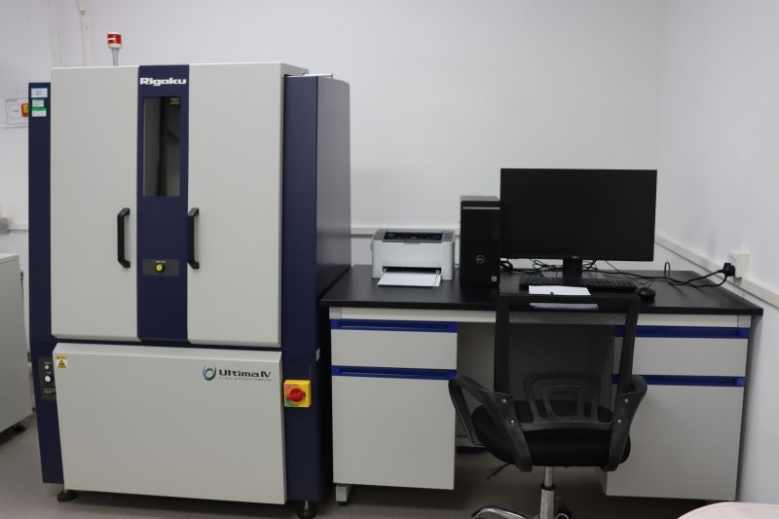
This test uses an X-ray diffractometer, which can calculate the crystallinity through the peak separation method (the area ratio of the crystalline peak to the amorphous halo), identify the crystal form by comparing with the database (such as the identification of the crystal form of SiO₂ filler), and calculate the grain size using the Scherrer formula. It can simultaneously analyze the crystal structures of the resin matrix and the filler.
| Project Objective
1. Meeting industry standard requirements and verify compliance;
2. Research and innovation;
3. Failure analysis and root cause tracing.
| Standard Basis
JY/T 0587 General rules for polycrystalline X-ray diffraction methods
| Service Products / Fields
Consumer electronics, automotive electronics, aerospace composites, chemical industry, medical materials, packaging films, medical materials, etc.
| Project Advantages
1. Professional Team: A team of highly experienced testing engineers and technical experts.
2. Advanced Equipment: Equipped with internationally leading testing instruments to ensure accuracy and reliability of results. Accurate phase identification and crystal structure analysis, precise quantification of crystallinity, high spatial resolution, analysis of nanoscale grain size, acquisition of lattice constants, and strong operability (rapid testing in the atmospheric environment and easy operation).
3. Efficient Service: Rapidly respond to customer needs and provide one-stop, high-efficiency inspection services.
4. Authoritative Certification: The laboratory is certified by ISO/IEC 17025, ensuring that test reports have international credibility.

Maxin Testing Laboratory
Learn more about our company

Electronic Manufacturing Information Hub
See more exciting case studies

Video Channel
Watch more exciting videos









 Buildings A1, A3, and A5, Peking University Science and Innovation Park, Songbai Road, Bao'an District, ShenzhenBuilding 3, Xinyao Valley, 415 Changyang Street, Suzhou Industrial Park, Suzhou City1st Floor, Building 4, No. 39 Anzhi Street, Suzhou Industrial Park, Suzhou City