+86-400-850-4050





Didn't find what you were looking for?
Consult a professional engineer immediately for your service















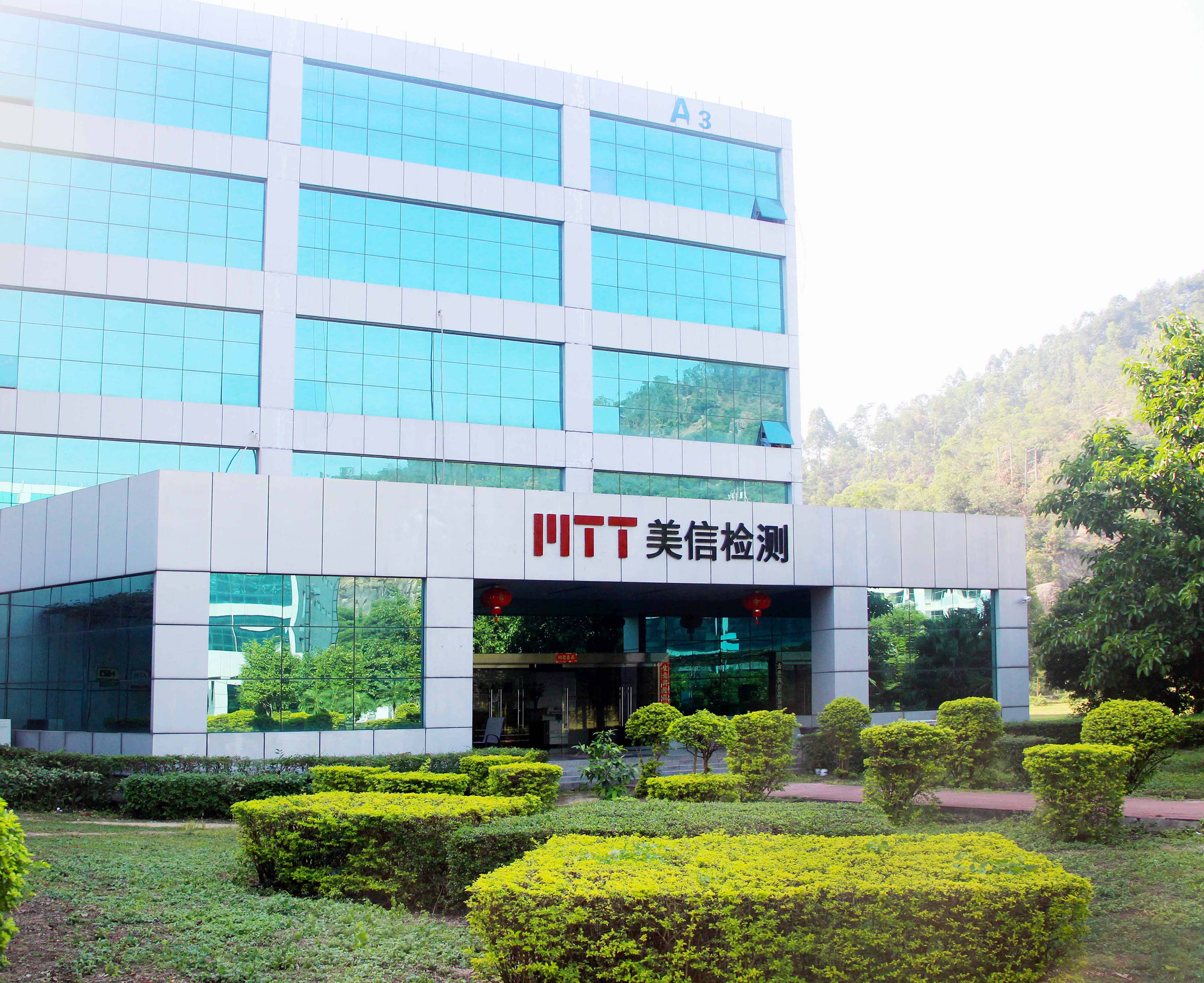





On December 13, the 9th Electronic Manufacturing Reliability Enhancement Technology Seminar, jointly hosted by Shenzhen Meixin Testing Technology Co., Ltd. and the Experimental and Innovation Practice Education Center (Analytical Testing Center) of Harbin Institute of Technology (Shenzhen), was successfully held at the Shenzhen University Town International Conference Center!

This seminar adopted a format with simultaneous sessions at the main venue and breakout rooms, with the breakout rooms focusing on two major topics: consumer electronics and automotive electronics. Participants included Chen Zeguo, Director of the Metrology and Certification Division of the Shenzhen Market Supervision Administration; Li Binbin, Deputy General Manager of Shenzhen Meixin Testing Technology Co., Ltd.; Mr. Zhang Wei; Professor Wang Lixin, Director of the Experimental Center (Analytical Testing Center) at Harbin Institute of Technology (Shenzhen); Xu Xun, Executive Vice President of Shenzhen Weimin Reliability System Engineering Research Institute; Cao Zhenghua, Chairman of the IPC CAEC China Automotive Electronics Steering Committee; and Mr. Wu Yeqing, Researcher at Ruidi Hangke.


This grand event attracted active participation from over 200 domestic enterprises and research institutions in the electronics manufacturing sector. Attendees engaged in in-depth discussions and case studies on industry hotspots and technical challenges, sharing cutting-edge technologies and successful case studies to promote knowledge sharing and technological advancement within the industry. The event aimed to propel the electronics manufacturing industry toward higher quality, greater efficiency, and more sustainable development.


01 Main Venue of the 9th Technical Seminar on Enhancing Reliability in Electronic Manufacturing
Research on Soldering Quality Evaluation of Printed Circuit Board Assembly (PCBA)
Zhang Wei, Vice President of Shenzhen Meixin Testing Technology Co., Ltd. In his presentation, Mr. Zhang delved deeply into the quality and failure modes of board-level interconnect solder joints. He analyzed failures such as solder joint cracking, detachment, and degraded electrical performance, laying a theoretical foundation for quality assessment and improvement. Based on failure analysis, he proposed acceptable solder joint criteria and developed rapid, accurate evaluation methods to enhance assessment efficiency. Additionally, he introduced comprehensive testing protocols for raw materials to ensure product quality from the source. These insights inject new vitality into quality control within the electronics manufacturing industry. Sustainable Management Strategies and Practices for Automotive Electronics Supply Chains in a VUCA Environment Cao Zhenghua, Chairman of the IPC CAEC China Automotive Electronics Steering Committee Senior Supplier Quality Specialist, SAIC-GM Co., Ltd. Chairman Cao pointed out that the automotive electronics supply chain faces multiple challenges, requiring flexible and pragmatic management strategies in a VUCA (Volatility, Uncertainty, Complexity, Ambiguity) environment. He proposed advancing Continuous Improvement System 2.0, centered on problem-solving and bottleneck elimination, with the goal of enhancing quality, reducing costs, and improving efficiency. Through methods such as lean management, rapid response, and tiered auditing, factory layouts will be optimized, production line utilization rates enhanced, and waste reduced. Concurrently, a differentiated advancement strategy will be implemented, tailoring approaches to individual suppliers. Chairman Cao's insights offer fresh perspectives for sustainable automotive electronics supply chain management, empowering enterprises to navigate complex environments and achieve high-quality development.


Advances in the Application of Advanced Materials Characterization in Reliability Analysis
Ma Qing, Associate Researcher at Harbin Institute of Technology (Shenzhen) Professor Ma, with his profound academic background and extensive experience, demonstrated unique insights in the field of materials characterization technology. Focusing on the high-end electronics manufacturing sector, he is dedicated to exploring the latest applications of materials characterization techniques in reliability analysis. During his presentation, Professor Ma elaborated on the development context of the shared platform and provided an in-depth analysis of the Analytical Testing Center's operations. Using chip-related solutions as a case study, he explained the practical application and optimization strategies of the technology in an accessible manner, offering profound academic insights to attendees. Reliability Evaluation of Electronic Components Cui Fengzhou, General Manager of the Semiconductor Division at Meixin Testing Mr. Cui first emphasized that electronic components, as the foundation of electronic product control units, are critically important for reliability. He then elaborated on the overview of electronic components, common failure modes, reliability evaluation methods, and certification assessments. Using typical case studies—such as diode overvoltage breakdown and MOSFET bonding anomalies—he provided detailed analyses of failure causes. He also introduced reliability evaluation methods and standards, including JEDEC, AECQ, and GJB, while emphasizing the importance of supplier management at the material sourcing level, device reliability assessment, and DPA (Destructive Physical Analysis).


02 The 9th Symposium on Enhancing Reliability in Electronics Manufacturing Panel Discussion 1: Consumer Electronics


At the Consumer Electronics sub-forum, Shu Qiao, Project Engineer at Maxim Testing, delved into the critical role of thermal analysis technology in product reliability assessment. Using real-world case studies, she demonstrated the unique value of thermal analysis in resolving electronic product reliability issues. Zhang Canwen, Reliability Project Engineer at Maxim Testing, provided a comprehensive analysis of SIR&CAF testing for printed circuit boards, emphasizing the importance of process control during testing and sharing preventive measures. Researcher Wu Yeqing from Redisign Technology focused on the challenge of individual component failures in mass production that cannot be reproduced. He proposed an analysis method based on component parameter variability, offering new insights for evaluating electronic material quality. Feng Xueliang, an expert in electronic process failure analysis at Maxim Testing, demonstrated the specific processes and methods of failure analysis through multiple typical failure case studies, providing valuable experience for resolving electronic product reliability issues. 03 Subforum 2 of the 9th Technical Seminar on Enhancing Electronic Manufacturing Reliability: Automotive Electronics


Meixin Testing Reliability Project Engineer Shi Yong presented CCS reliability testing standards and classifications, helping attendees gain a deeper understanding of the importance of CCS testing. Meixin Testing semiconductor failure analysis expert You Qiqian shared failure analysis processes and typical case studies for automotive electronics, emphasizing the critical role of proactive prevention and continuous improvement in ensuring the reliability of automotive electronic products. Meixin Testing Project Engineer Wang Jie provided a detailed analysis of connector testing methods, comparing requirements under different standards and offering valuable recommendations for connector selection and testing. IPC Training Instructor Kang Laihui delivered an in-depth interpretation of the core content of IPC standards, providing attendees with practical guidance on adhering to international standards and enhancing manufacturing capabilities. 04 The 9th Symposium on Enhancing Reliability in Electronic Manufacturing THE END


The event concluded successfully with an unprecedented turnout that far exceeded expectations. The vibrant atmosphere on-site demonstrated the high level of attention and enthusiastic support from all sectors for Meixin Testing. Meixin Testing, as a dedicated pioneer in the field of failure analysis, has steadily progressed through twelve years of development. Over this extended period, we have successfully built a solid bridge of trust with tens of thousands of partners through our exceptional expertise and relentless dedication, earning widespread acclaim and support. We steadfastly uphold a technology-first philosophy, focusing on breakthroughs and innovative applications, fully recognizing that technology is the inexhaustible driving force behind industry advancement. We are committed to providing enterprises with the most cutting-edge and reliable failure analysis services, helping them pinpoint issues with precision, optimize product R&D processes and production stages, and achieve higher-quality development. Looking ahead, we are filled with anticipation and eagerly await the opportunity to reunite in the near future for new celebrations!


Maxin Testing Laboratory
Learn more about our company

Electronic Manufacturing Information Hub
See more exciting case studies
Video Channel
Watch more exciting videos






 Buildings A1, A3, and A5, Peking University Science and Innovation Park, Songbai Road, Bao'an District, ShenzhenBuilding 3, Xinyao Valley, 415 Changyang Street, Suzhou Industrial Park, Suzhou City1st Floor, Building 4, No. 39 Anzhi Street, Suzhou Industrial Park, Suzhou City