+86-400-850-4050





Didn't find what you were looking for?
Consult a professional engineer immediately for your service
















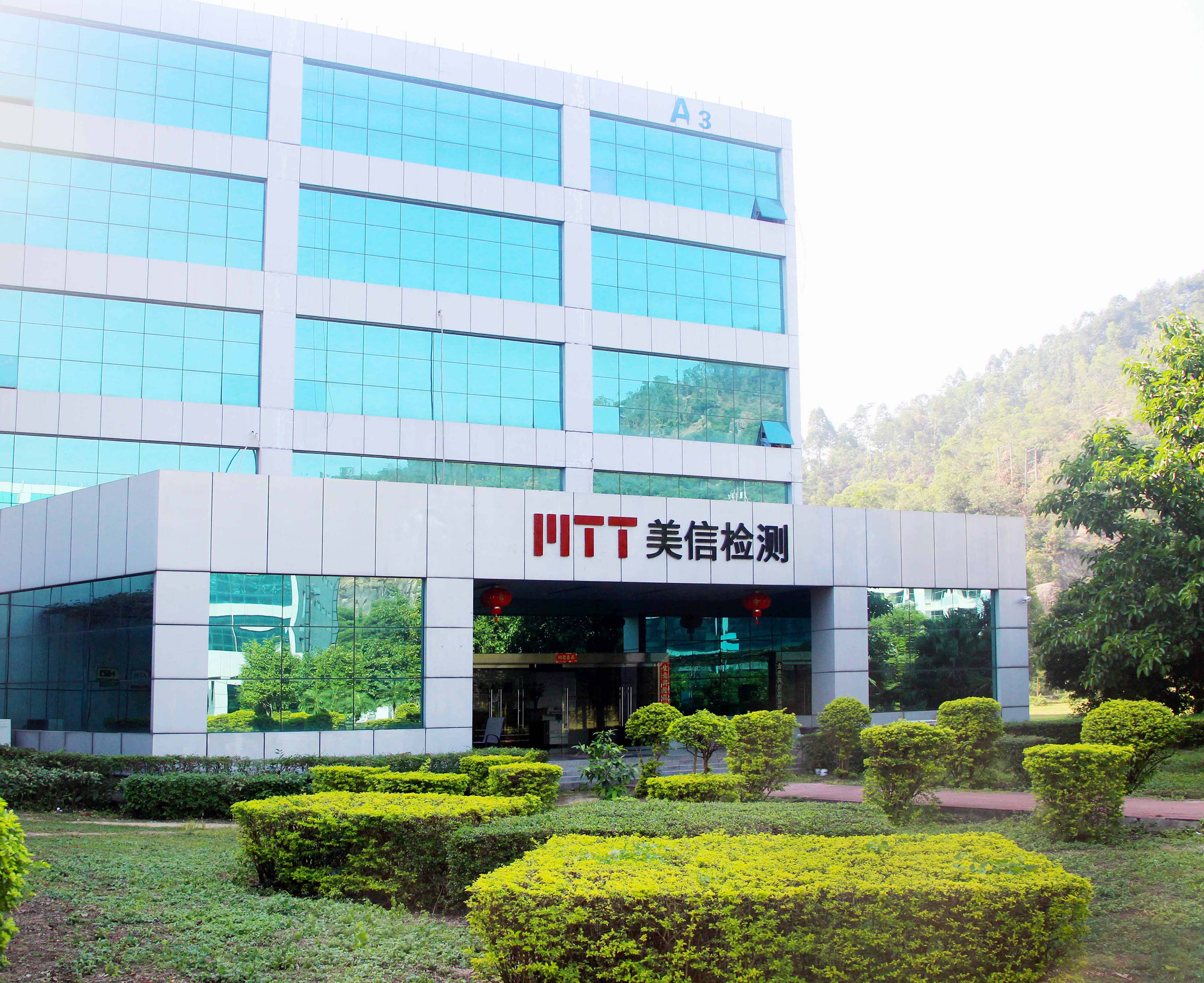





As the pace of automotive electronics and intelligent systems accelerates, electronic manufacturing technology is increasingly taking center stage within the industry chain. To foster industrial collaboration, promote standard adoption, and enhance failure analysis capabilities, the “2025 Automotive Electronics Reliability Technology Exchange Conference (Wuhan Station)” was successfully held in Wuhan on July 4, 2025. The event was hosted by Shenzhen Meixin Testing Technology Co., Ltd. (hereinafter referred to as “Meixin Testing”).
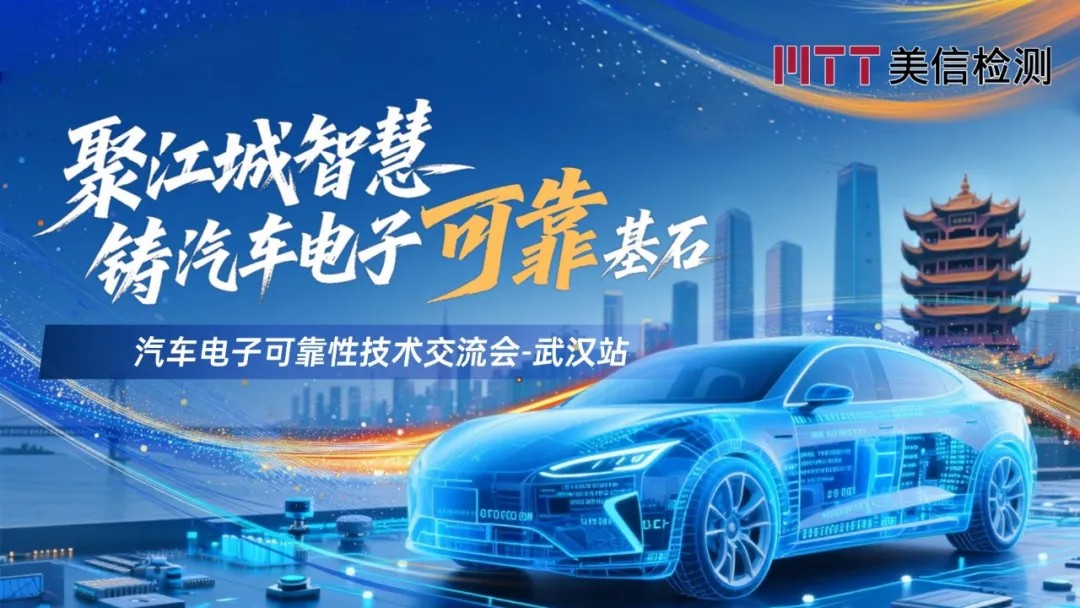
This conference, co-organized by the IPC CAEC China Automotive Electronics Steering Committee, Wuhan Electronic Intelligent Manufacturing Industry Association, and Wuhan New Energy Vehicle Industry Association, with strong support from Six Sigma Standard Technology Development (Wuhan) Co., Ltd., brought together numerous industry experts and representatives from leading enterprises to jointly explore key automotive electronics technologies, standard interpretations, and exemplary case studies.
Four Major Keynote Presentations
In-depth Analysis of Technical Challenges and Solutions
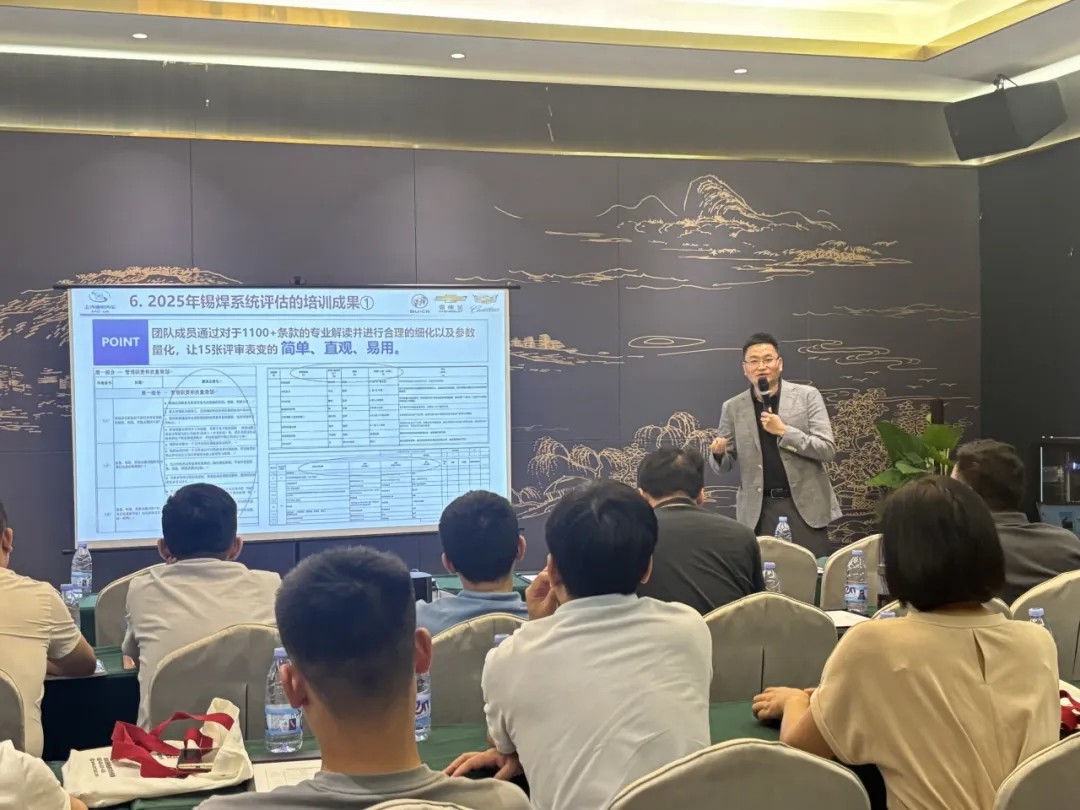
Introduction to the Implementation and Application of Modern Soldering Systems for Automotive Electronic Component PCBA
Cao Zhenghua, Chairman of the IPC CAEC China Automotive Electronics Guidance Committee /
Senior Supplier Quality Expert, SAIC-GM Co., Ltd.
Drawing on 26 years of deep automotive industry experience, Chairman Cao focused on electronics, controllers, high/low-voltage wiring harnesses, and new energy vehicle powertrain systems. He shared invaluable insights on quality control and supplier management success, providing practical guidance for supply chain collaboration.
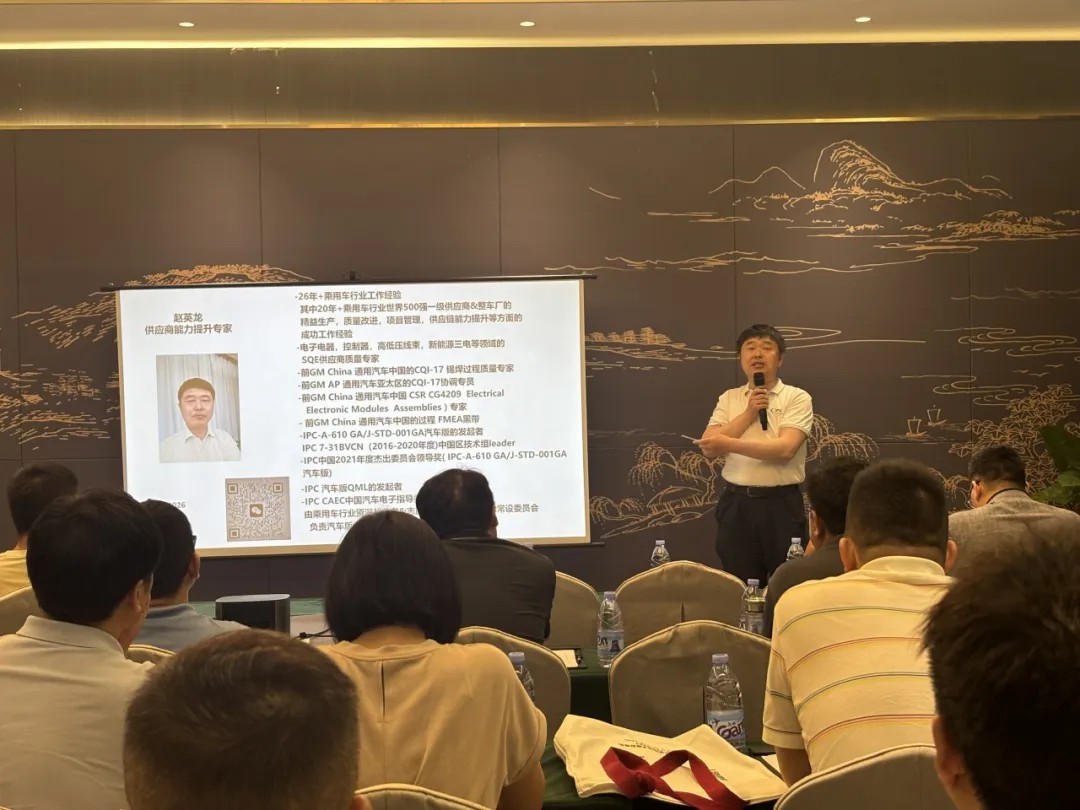
Process Audits Enhance Reliability in the Electronics Industry
Zhao Yinglong, Supplier Capability Development Specialist at an OEM /
Member of IPC CAEC China Automotive Electronics Guidance Committee
Mr. Zhao proposes leveraging the IPC QML framework to address challenges in automotive electronics manufacturing, clarifying the core focus of audits amid industry pressures. He emphasizes key standards and compliance requirements for the automotive QML, while identifying common pitfalls. The value lies in translating abstract standards into actionable process control points, effectively boosting first-pass yield in electronics mass production and enhancing overall reliability.
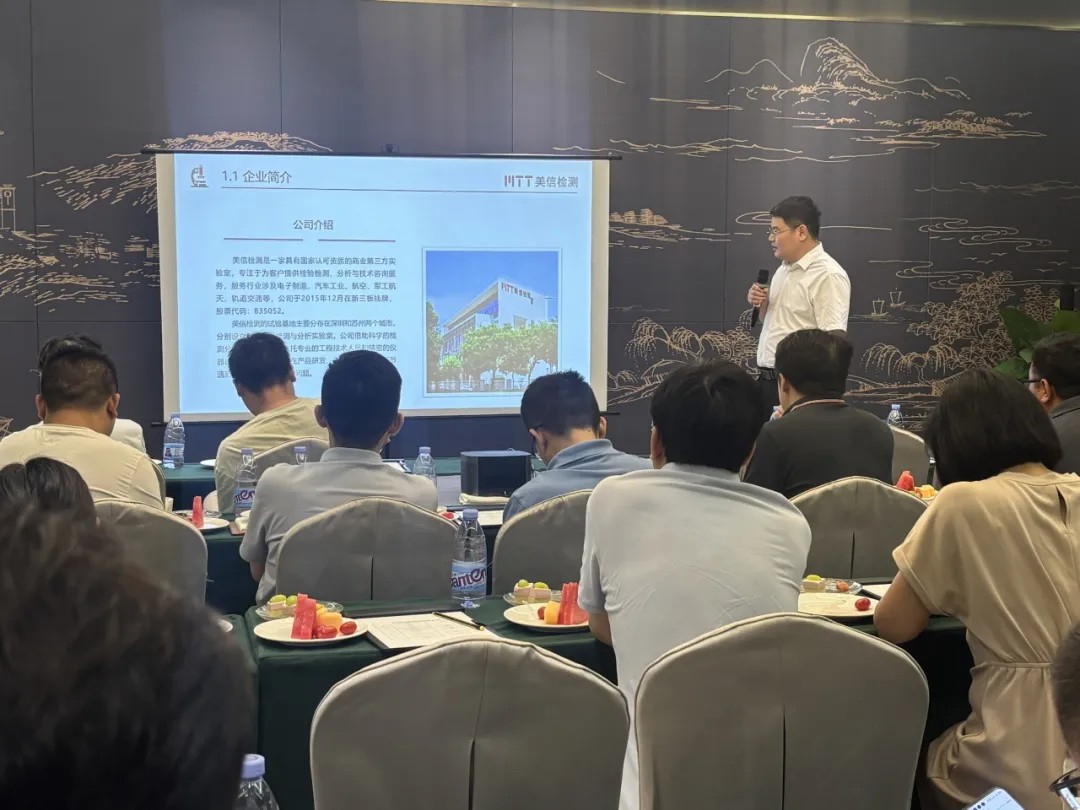
Automotive Electronic Component Testing Technology and Practical Applications
Xu Jiajia, Chief Engineer, Automotive Electronics Division, Maxine Testing
Chief Engineer Xu demonstrated comprehensive testing capabilities spanning electronic and thermal management components. He systematically outlined Maxine Testing's core technological advantages in the automotive electronics sector and showcased its robust technical support capabilities through detailed analysis of representative case studies.
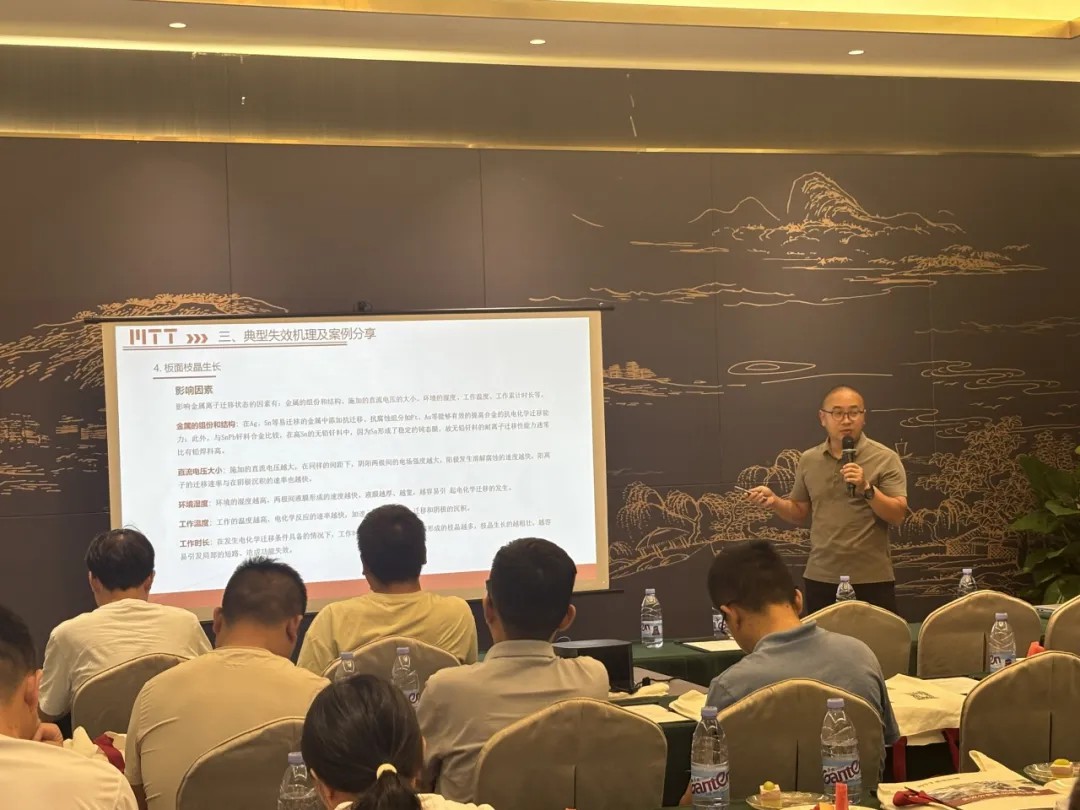
Failure Mechanisms and Case Studies of Automotive Electronic PCBs/PCBA
Feng Xueliang, Electronic Process Expert at Maxin Testing
Mr. Feng conducted an in-depth analysis of six major electronic failure mechanisms: including ENIG phosphorus-rich layer-induced solder joint brittle fracture, Kirkendall effect voids causing equipment downtime, solder joint fatigue-induced crack propagation, and short circuits caused by dendrite growth. Drawing from over 800 case studies, he not only explains these mechanisms but also provides corresponding solutions based on the failure mechanisms, offering comprehensive failure prevention and control strategies. This provides enterprises with practical solutions for addressing reliability challenges in production practice.
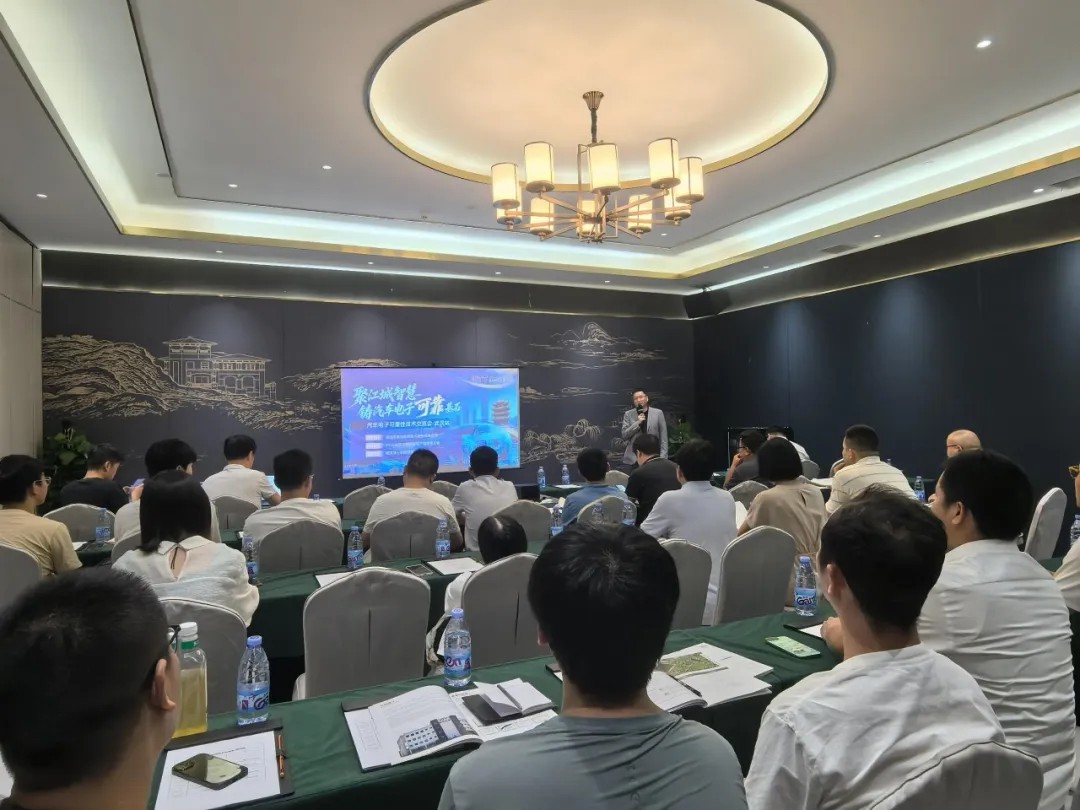
The successful hosting of the “2025 Automotive Electronics Reliability Technology Exchange Conference (Wuhan Station)” has established a high-value platform for technical exchange and knowledge sharing within the automotive electronics industry in Central China. Through in-depth presentations by experts and vigorous discussions, attendees gained a deeper understanding of cutting-edge trends in automotive electronics reliability technology, the essence of standards, failure analysis techniques, and key points for process audits.
Maxin Testing extends its sincere gratitude to the participating experts, partners, and all attendees for their intellectual contributions. By deeply integrating technical standards with practical case studies, this conference has provided robust momentum for innovative breakthroughs in automotive electronics reliability technology. It has not only established a platform for industry-wide technical exchange and collaborative innovation but also injected innovative vitality into the field of automotive electronics reliability through systematic solutions.

Maxin Testing Laboratory
Learn more about our company
Electronic Manufacturing Information Hub
See more exciting case studies
Video Channel
Watch more exciting videos






 Buildings A1, A3, and A5, Peking University Science and Innovation Park, Songbai Road, Bao'an District, ShenzhenBuilding 3, Xinyao Valley, 415 Changyang Street, Suzhou Industrial Park, Suzhou City1st Floor, Building 4, No. 39 Anzhi Street, Suzhou Industrial Park, Suzhou City