+86-400-850-4050





Didn't find what you were looking for?
Consult a professional engineer immediately for your service





















Through thermal shock, pressure pulse cycle, and vibration shock tests, the temperature, pressure, and mechanical stress that the liquid cooling plate will bear during its entire life cycle are simulated to verify its structural durability and performance stability.
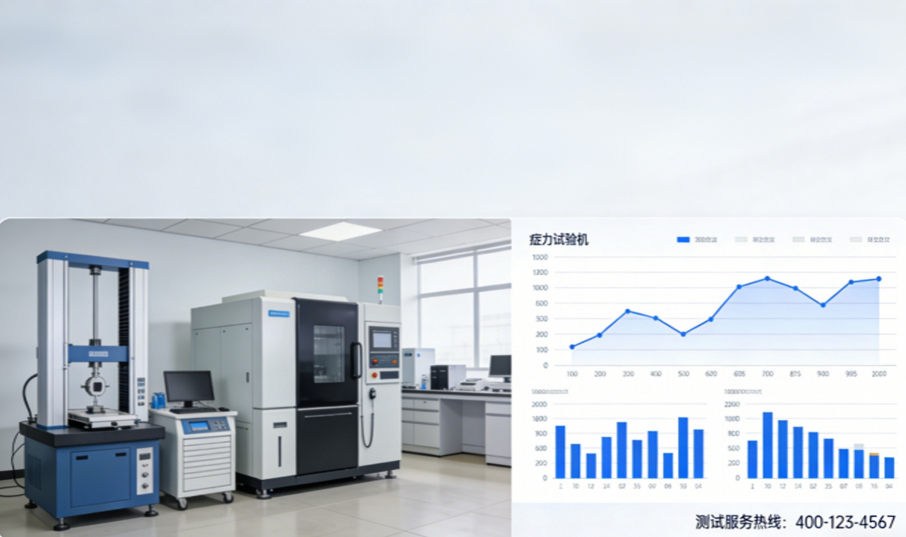
Test Background
During long-term operation, liquid cooling plates need to withstand alternating stresses such as thermal shock, pressure pulses, and vibration shocks. Reliability testing can detect the risk of fatigue failure in advance to ensure a 10-year service life.
Test Introduction
Through thermal shock, pressure pulse cycle, and vibration shock tests, the temperature, pressure, and mechanical stress that the liquid cooling plate will bear during its entire life cycle are simulated to verify its structural durability and performance stability.
Testing Objectives
Verify the structural integrity and sealing performance under thermal cycling
Evaluate the fatigue impact of pressure pulses on welds and flow channels
Ensure the anti-vibration and anti-shock ability during transportation and operation
Predict the service life and failure mode of liquid cooling plates
Test Standards
T/CESA 1249.1-2023 Cold plate technical specification
IEC 60068-2-14 Temperature change test
ISO 6803 Pressure pulse test
GB/T 2423 Vibration and shock test
Applicable Products/Fields
Suitable for scenarios requiring long-term reliable operation, such as AI servers, vehicle-mounted liquid cooling, and industrial frequency converters.
Test Content
Thermal shock test: Temperature cycling from -40°C to 85°C, 500 cycles
Pressure pulse test: 0 to 1.5 times the working pressure, 100,000 cycles
Vibration test: Random vibration from 5 to 2000 Hz, 20g
Shock test: Half-sine wave, 50g, 11ms
Project Advantages
Capable of applying combined temperature and pressure stresses simultaneously
Real-time monitoring of leakage and pressure drop changes during testing
Provides fatigue life curves and failure analysis
Laboratory Configuration
High and low temperature shock test chamber (two-chamber method)
Pressure pulse test bench (0~5MPa, programmable waveform)
Electromagnetic vibration test system
Impact test table
FAQ
Q: Why is the pressure pulse test performed 100,000 times?
A: To simulate pressure fluctuations such as system start-stop and load changes, 100,000 cycles can cover a service life of more than 10 years.

Maxin Testing Laboratory
Learn more about our company

Electronic Manufacturing Information Hub
See more exciting case studies

Video Channel
Watch more exciting videos









 Buildings A1, A3, and A5, Peking University Science and Innovation Park, Songbai Road, Bao'an District, ShenzhenBuilding 3, Xinyao Valley, 415 Changyang Street, Suzhou Industrial Park, Suzhou City1st Floor, Building 4, No. 39 Anzhi Street, Suzhou Industrial Park, Suzhou City