+86-400-850-4050





Didn't find what you were looking for?
Consult a professional engineer immediately for your service





















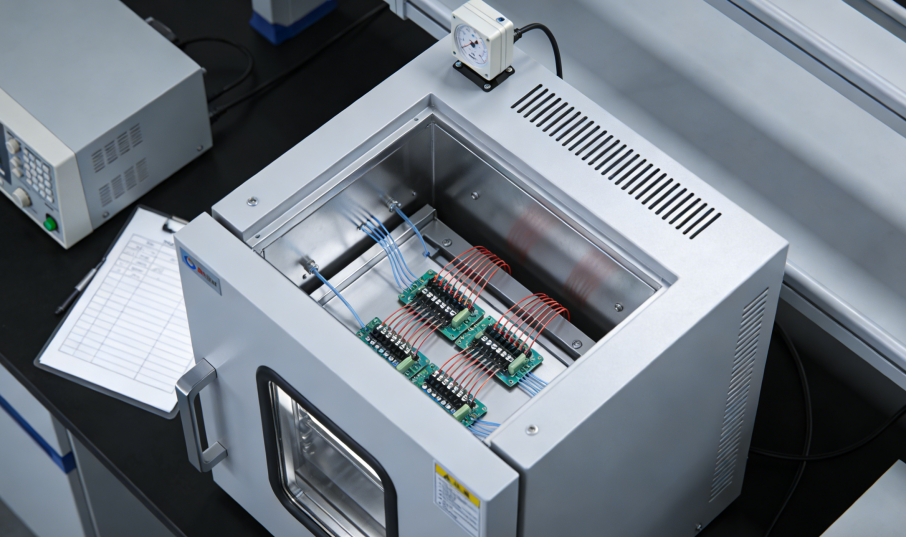
The environmental adaptability and aging test evaluates the performance stability of the coolant during long-term use through cold-hot cycle aging, high-temperature aging, 85°C oxidation stability test, and anti-foaming test.
Test Background
During long-term operation, the coolant will undergo aging processes such as temperature changes, oxidation, and foaming. The performance degradation may lead to a decrease in heat transfer and intensified corrosion, which affects the service life of the system.
Test Introduction
The environmental adaptability and aging test evaluates the performance stability of the coolant during long-term use through cold-hot cycle aging, high-temperature aging, 85°C oxidation stability test, and anti-foaming test.
Testing Objectives
Verify the performance change after cold-hot cycle
Evaluate the high-temperature oxidation stability
Detect the anti-foaming performance after long-term use
Prediction of coolant replacement cycle
Test Standards
ASTM D1384 High-temperature aging test
ASTM D1882 Antifoam test
YD/T 3982-2021 Requirements for aging test
GB/T 29743.2-2025 Coolant stability test
Applicable Products/Fields
Suitable for long-term stability evaluation of coolant, research on fluid replacement cycle, and failure analysis.
Test Content
Thermal cycling aging: Temperature cycling from -40°C to 85°C, 500 cycles
High-temperature aging: Constant temperature storage at 85°C for 1000 hours
Oxidation stability test: Accelerated oxidation by introducing air or oxygen
Antifoam test: Determination of defoaming time after aeration and foaming
Performance comparison after aging: Retest of physical and chemical properties
Project Advantages
Capable of simulating a service life of more than 10 years
Full performance comparison before and after aging
Provides fluid replacement cycle recommendations and failure warning
Laboratory Configuration
High and low temperature alternating test chamber
High-temperature aging chamber
Anti-foaming test device
A full set of physical and chemical performance testing equipment (before and after aging)
FAQ
Q: How often should the coolant be replaced?
A: For the pure water system, the conductivity needs to be monitored regularly for replacement. The ethylene glycol solution is generally replaced every 3-5 years, which specifically depends on the operating temperature and maintenance conditions.

Maxin Testing Laboratory
Learn more about our company

Electronic Manufacturing Information Hub
See more exciting case studies

Video Channel
Watch more exciting videos









 Buildings A1, A3, and A5, Peking University Science and Innovation Park, Songbai Road, Bao'an District, ShenzhenBuilding 3, Xinyao Valley, 415 Changyang Street, Suzhou Industrial Park, Suzhou City1st Floor, Building 4, No. 39 Anzhi Street, Suzhou Industrial Park, Suzhou City