+86-400-850-4050





Didn't find what you were looking for?
Consult a professional engineer immediately for your service






















The physicochemical property test covers core indicators such as appearance and cleanliness, density and viscosity, freezing point and boiling point, pH value and corrosivity, electrical conductivity, and dielectric strength, comprehensively evaluating the basic performance of the coolant.
Test Background
The physical and chemical properties of the coolant directly determine its heat transfer ability, flow characteristics, and compatibility with the system. Low-quality coolant may cause problems such as corrosion, blockage, and heat transfer attenuation.
Test Introduction
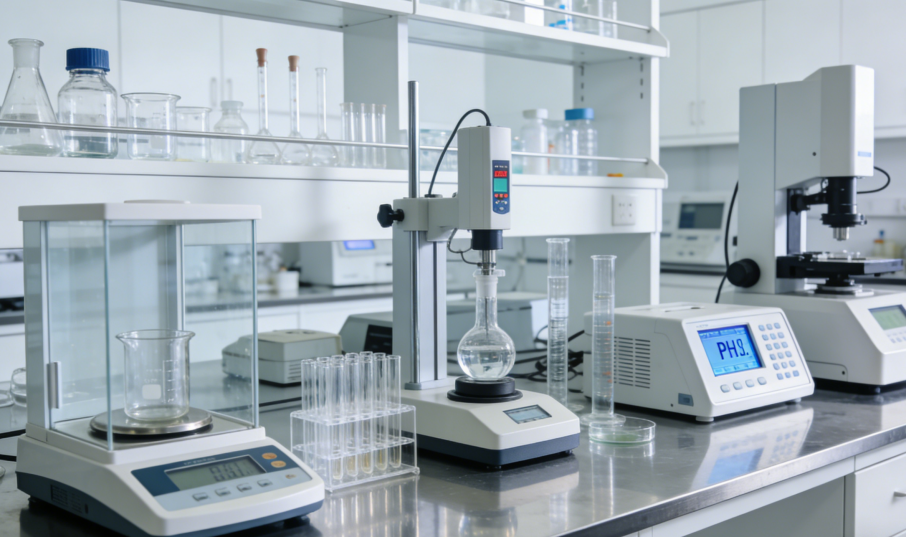
The physicochemical property test covers core indicators such as appearance and cleanliness, density and viscosity, freezing point and boiling point, pH value and corrosivity, electrical conductivity, and dielectric strength, comprehensively evaluating the basic performance of the coolant.
Testing Objectives
Verify that the appearance and cleanliness of the coolant meet the requirements
Measure the density and viscosity at different temperatures
Ensure that the freezing point/boiling point meets the requirements of the application environment
Detect safety indicators such as pH value, electrical conductivity, and dielectric strength
Test Standards
YD/T 3982-2021 Technical requirements and test methods for cooling liquids in data center liquid cooling systems
GB/T 29743.2-2025 Motor vehicle coolants
ASTM D1120 Boiling point test
ASTM D1177 Freezing point test
Applicable Products/Fields
Suitable for various liquid cooling working fluids such as water-based coolants, ethylene glycol solutions, propylene glycol solutions, and electronic fluorinated liquids.
Test Content
Appearance and odor: Colorless and transparent, no abnormal odor
Density test: Density measurement at 20°C/40°C/60°C
Viscosity test: Kinematic viscosity measurement (-40°C~60°C)
Freezing point/boiling point test: Freezing point and boiling temperature
pH value and conductivity: Acidity and alkalinity and ion concentration
Dielectric strength: Insulation performance test (fluorinated liquid)
Project Advantages
Full set of physical and chemical performance testing capabilities
High-precision viscometer (0.1 cSt accuracy)
Provides comprehensive performance data sheets and compliance evaluations
Laboratory Configuration
Density pycnometer/digital densitometer
Glass capillary viscometer/rotary viscometer
Freezing point meter/boiling point meter
pH meter/conductivity meter
Dielectric strength tester
FAQ
Q: What is the conductivity requirement for water-based coolants?
A: Usually, it is required to be ≤5 µS/cm. Pure water can reach below 0.1 µS/cm. Corrosion inhibitors need to be added to the ethylene glycol solution, but the electrical conductivity should still be as low as possible.

Maxin Testing Laboratory
Learn more about our company
Electronic Manufacturing Information Hub
See more exciting case studies

Video Channel
Watch more exciting videos









 Buildings A1, A3, and A5, Peking University Science and Innovation Park, Songbai Road, Bao'an District, ShenzhenBuilding 3, Xinyao Valley, 415 Changyang Street, Suzhou Industrial Park, Suzhou City1st Floor, Building 4, No. 39 Anzhi Street, Suzhou Industrial Park, Suzhou City