+86-400-850-4050





Didn't find what you were looking for?
Consult a professional engineer immediately for your service























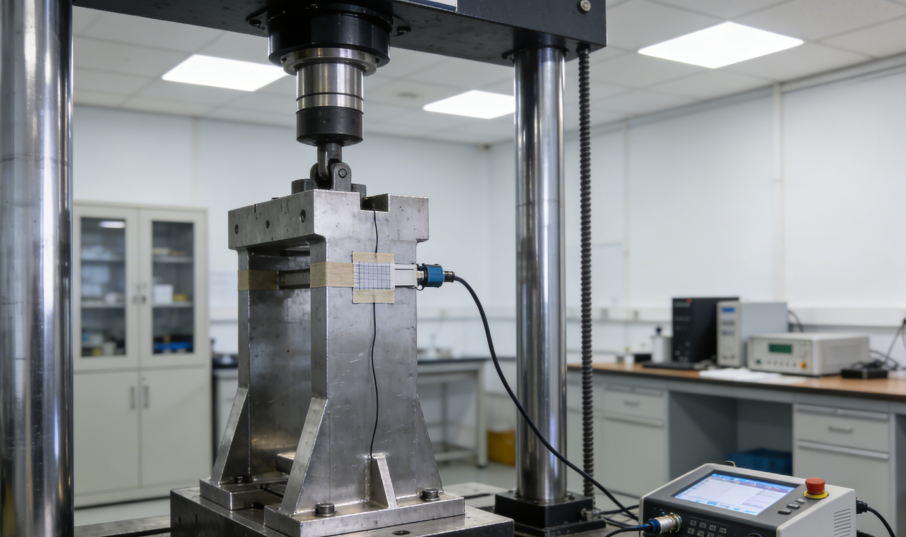
The structural strength test verifies the structural integrity of quick connectors under extreme pressure and abnormal forces through hydrostatic pressure holding tests, burst pressure tests, and separation safety tests.
Test Background
Quick connectors may be subjected to overpressure or accidental impacts under abnormal working conditions. Insufficient structural strength may lead to bursting and flying fragments, causing serious safety accidents.
Test Introduction
The structural strength test verifies the structural integrity of quick connectors under extreme pressure and abnormal forces through hydrostatic pressure holding tests, burst pressure tests, and separation safety tests.
Testing Objectives
Verify that the pressure resistance in the connected state is ≥3 times the working pressure
Determine the burst pressure limit and failure mode
Ensure reliable sealing at both ends in the disconnected state
Evaluate the separation safety in case of accidental pulling
Test Standards
GB/T 7939.2-2024 Test methods for quick-change connectors
ISO 18869-2017 Burst pressure test
OCP UQD structural strength requirements
Applicable Products/Fields
Suitable for UQD quick connectors, high-pressure quick connectors, pressure hot-plug connectors, etc. in liquid cooling systems.
Test Content
Hydrostatic pressure holding test: Hold the pressure at 1.5 times the working pressure for 5 minutes
Burst pressure test: Increase the pressure at a uniform speed until rupture and record the burst value
Pressure resistance test in the disconnected state: Pressurize both ends respectively to verify the sealing
Separation safety test: Control the disconnection force and leakage in case of accidental pulling
Project Advantages
High-pressure test system (maximum 20 MPa)
High-speed camera records the blasting process
Provides safety margin assessment and failure analysis
Laboratory Configuration
Hydrostatic test bench (0-20 MPa)
Burst test system (automatically records the pressure curve)
High-speed camera system
Protection device (prevent debris from splashing)
FAQ
Q: Why is a pressure test also required in the disconnected state? A: In the disconnected state, both ends of the connector are individually sealed. It is necessary to verify that it can still provide reliable sealing after disconnection when the pipeline is under pressure to prevent leakage.

Maxin Testing Laboratory
Learn more about our company

Electronic Manufacturing Information Hub
See more exciting case studies

Video Channel
Watch more exciting videos









 Buildings A1, A3, and A5, Peking University Science and Innovation Park, Songbai Road, Bao'an District, ShenzhenBuilding 3, Xinyao Valley, 415 Changyang Street, Suzhou Industrial Park, Suzhou City1st Floor, Building 4, No. 39 Anzhi Street, Suzhou Industrial Park, Suzhou City